Launch offer — valid today only

📄 Digital book in PDF · read it on your phone or print it

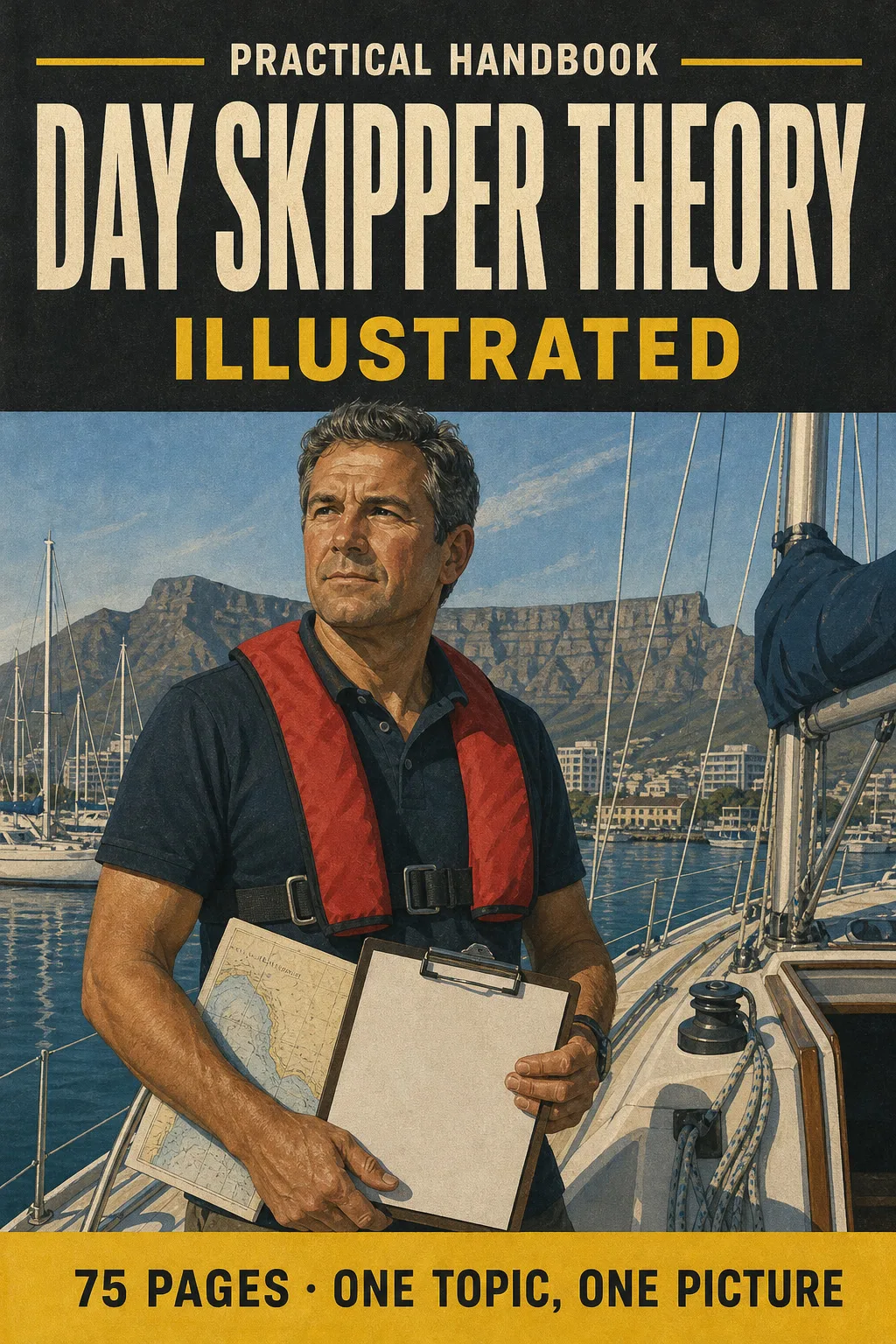
Day Skipper Theory Illustrated: Chartwork, Tides and Rules of the Road in Drawings Every Calculation in the Same Order

For the Day Skipper theory course in South African waters: compass conversions with local variation, the rule of twelfths, course to steer, the Agulhas Current, IALA Region A marks, navigation lights, the Mayday call and marine weather. Every topic has its own page: first the drawing, then what you need to remember. 75 illustrated pages.

I WANT THE BOOK + 2 BONUS BOOKS

🔒 Secure checkout · PDF by email · 30-day guarantee

Every topic, its own pageEvery calculation and every mark drawn, with the explanation alongside
75 illustrated pages9 parts, from the words the instructor uses to the exam review
Up-to-date sourcesCOLREGs, IALA Region A and SAMSA small vessel regulations
PDF by emailFormat

Look Inside the Book

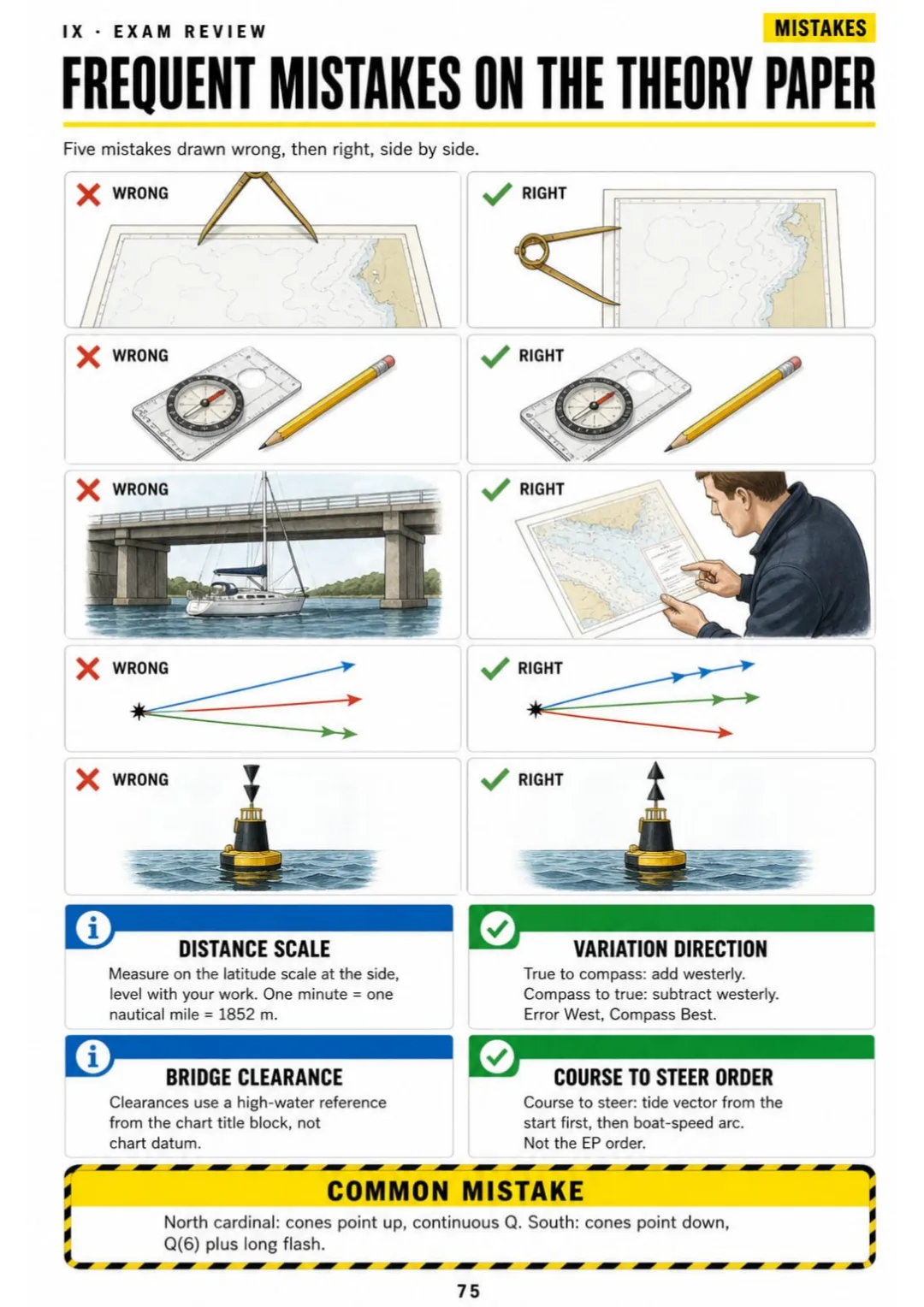
Every page has a large drawing and a box with the numbers and steps you need to know:

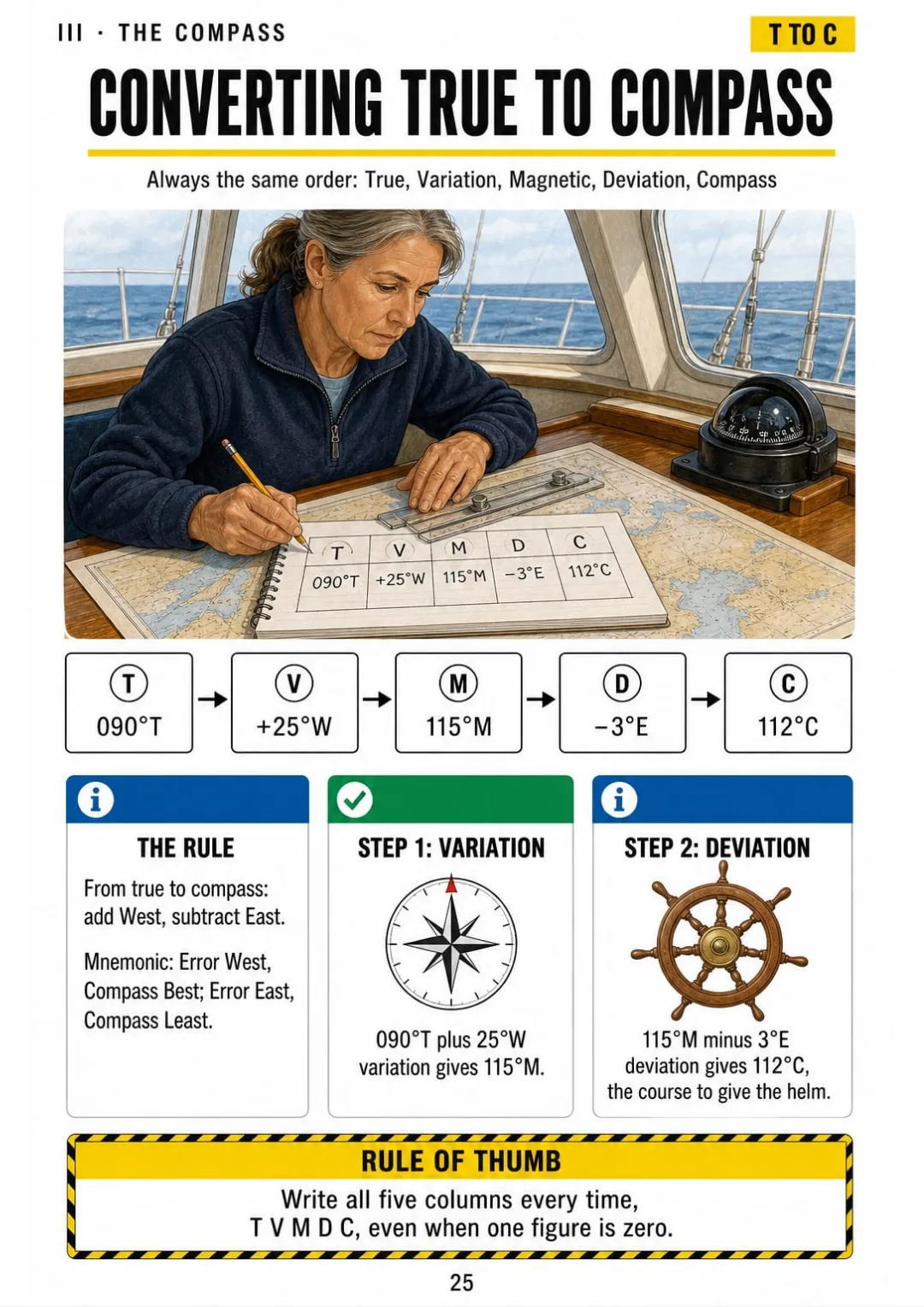
090°T + 25°W = 115°M, − 3°E = 112°C
090°t + 25°w = 115°m, − 3°e = 112°c
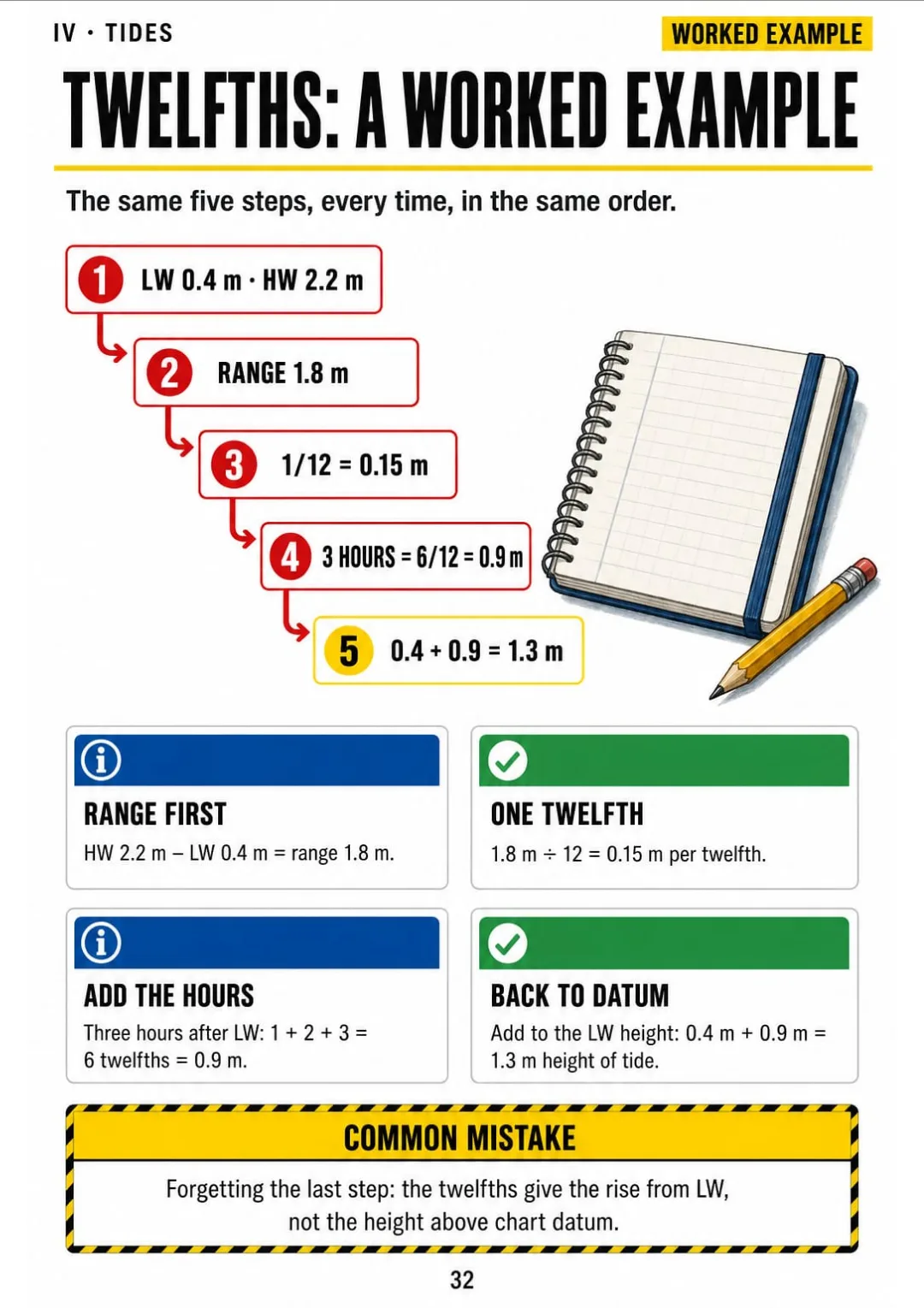
LW 0.4 m, range 1.8 m: three hours later the height is 1.3 m.
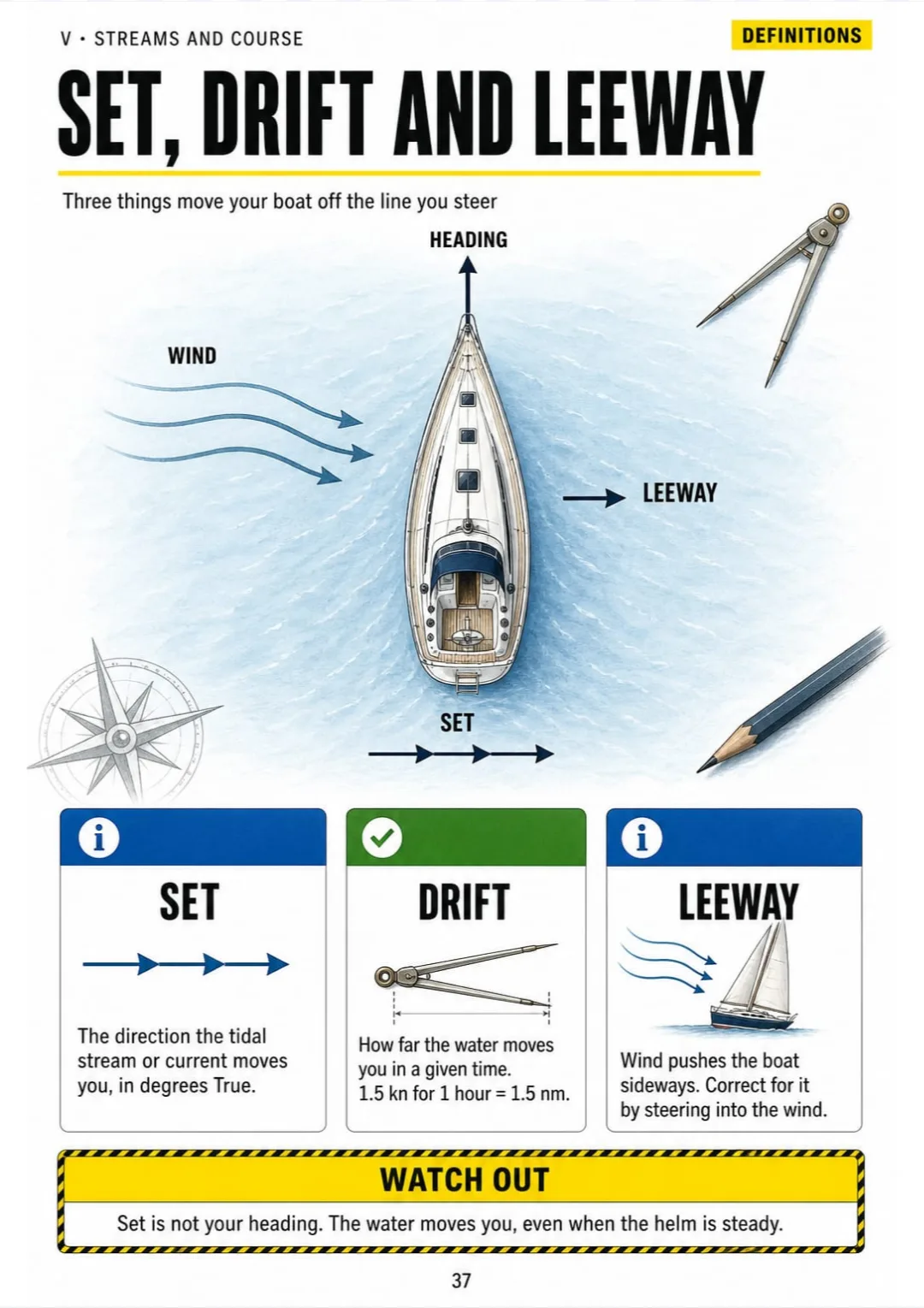
Set = direction · Drift = distance · Leeway = wind pushing you sideways.
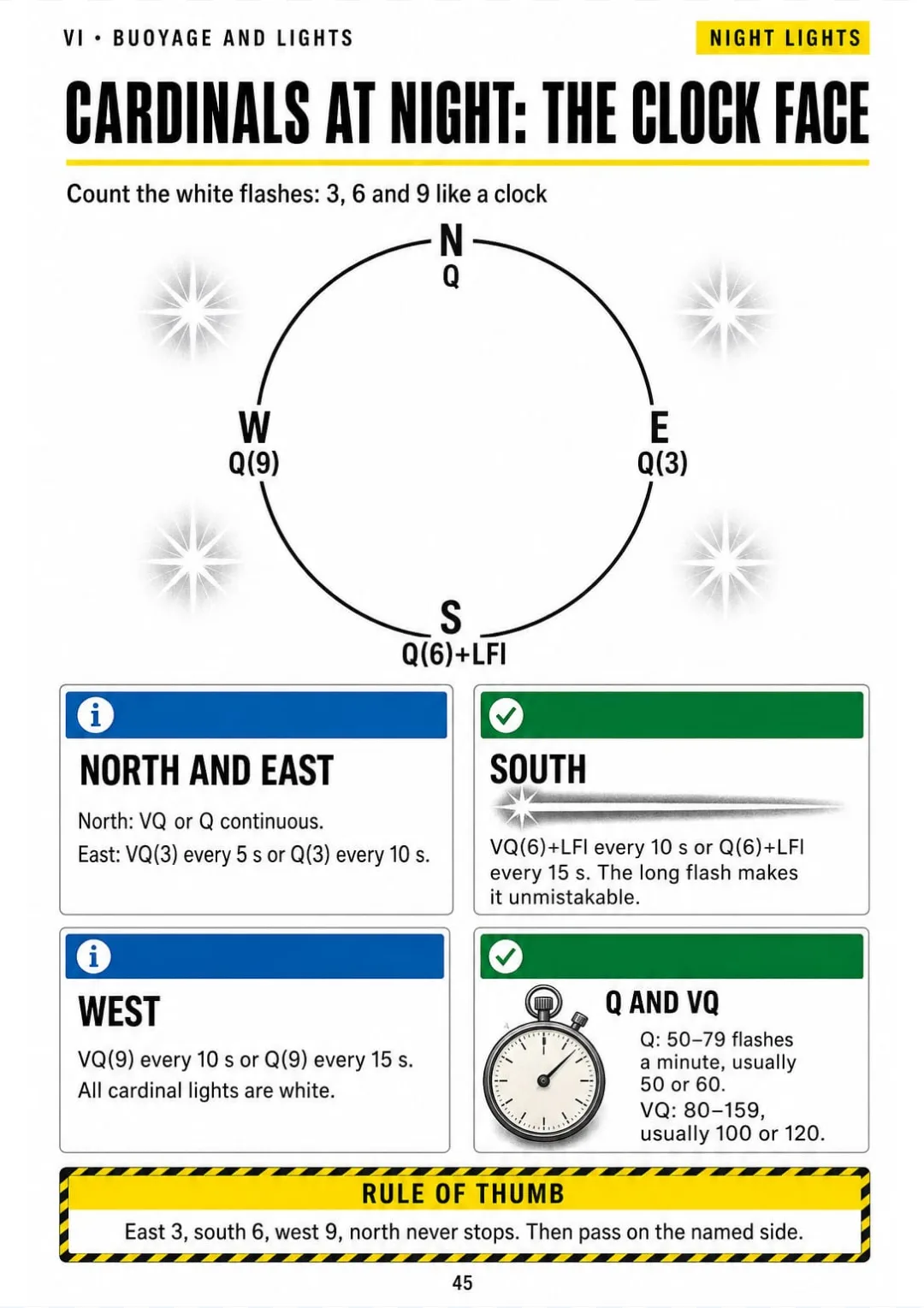
Cardinal lights: north continuous, east 3, south 6 plus a long flash, west 9.
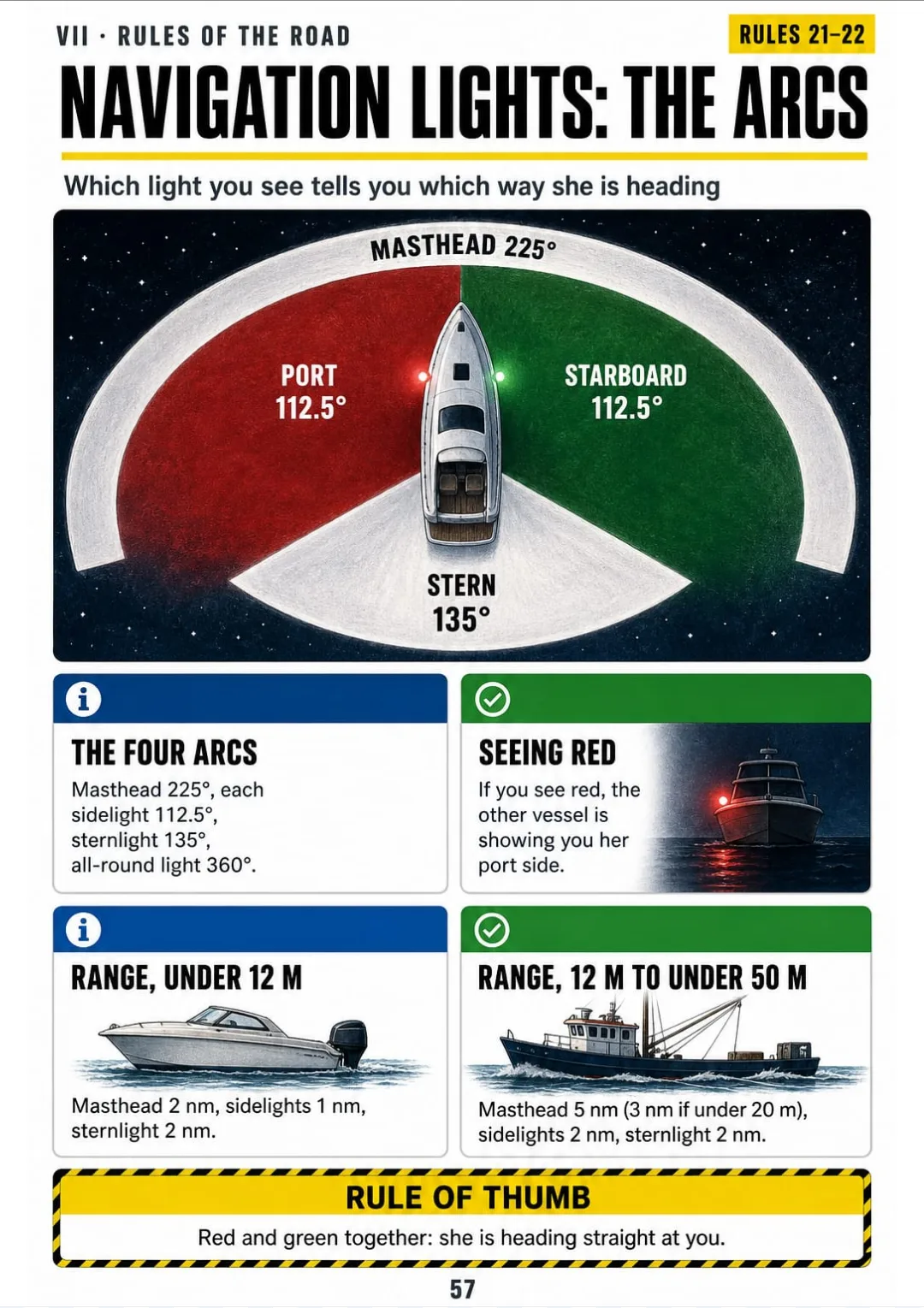
Rule 21 arcs: masthead 225°, sidelights 112.5°, sternlight 135°.
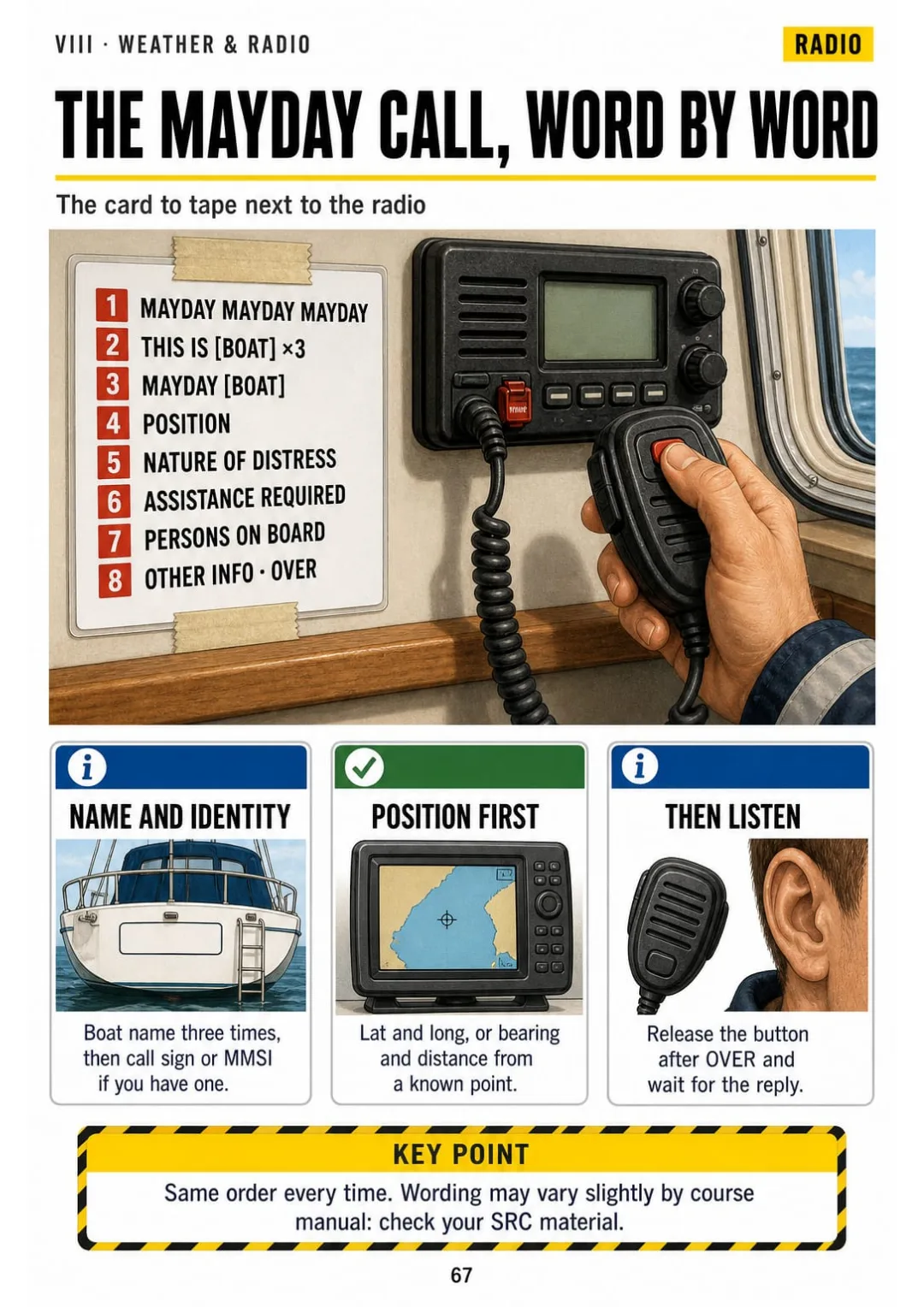
Mayday ×3 · this is ×3 · position · distress · help · POB · over
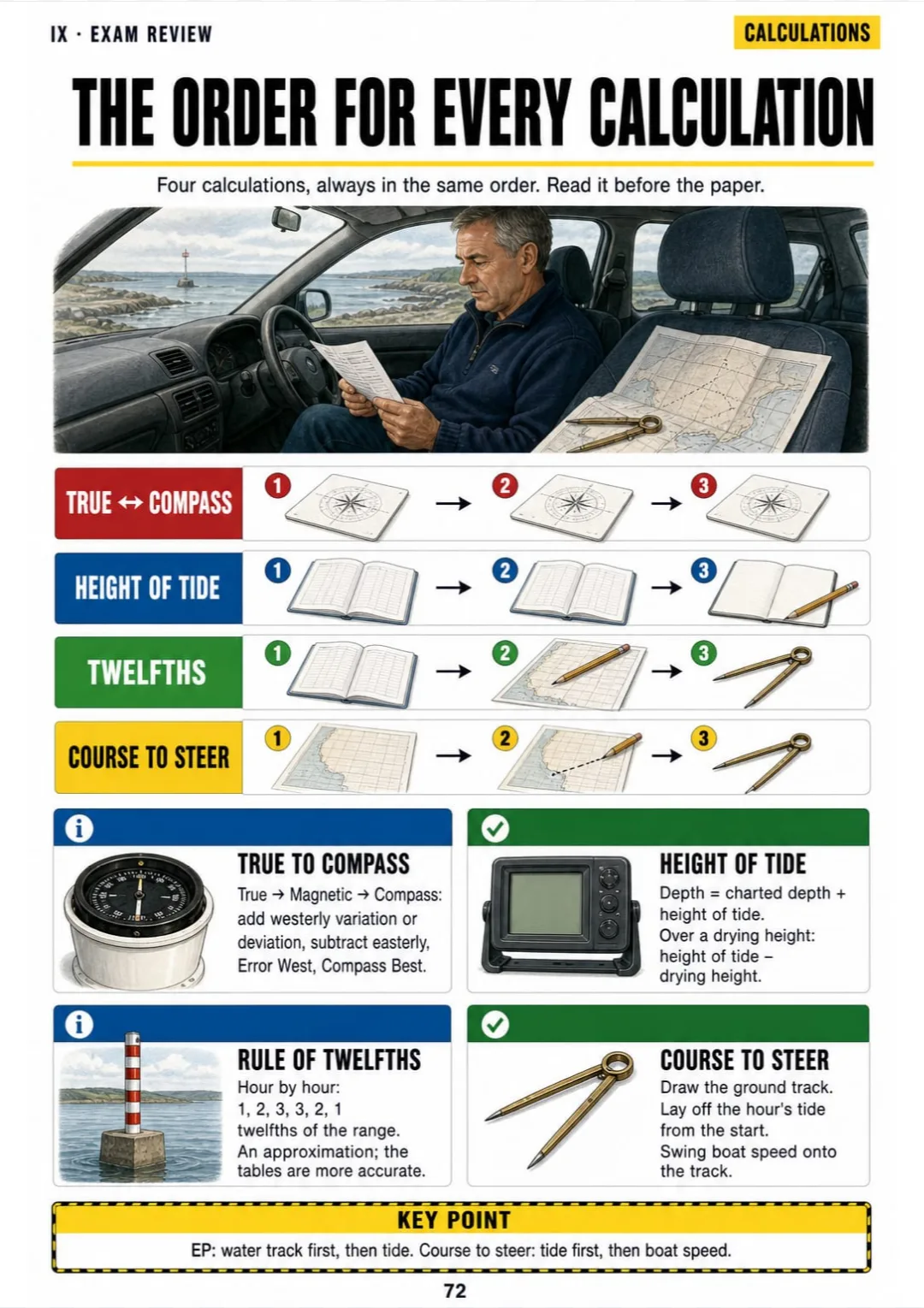
T→M→C adds westerly; depth = charted depth + height of tide; twelfths 1-2-3-3-2-1.
Distance on the side latitude scale, never the longitude scale along the top.

Swipe to see more →

These are real pages from the book. The table of contents is the full one: 9 parts and 70 topics.

The Problem Isn't You. It's How It Was Explained to You.

It's the third evening of the course. The instructor hands you a chart, a tidal diamond and a harbour across the bay, and asks for a course to steer.

You know the boat and you know the water. But the manual covers it in two dense paragraphs of vectors, set and drift, and under pressure the order falls apart: was the stream laid from the start or from the end?

Set = direction · Drift = distance · Leeway = wind pushing you sideways.

In the book, course to steer is one page. Ground track, stream from the start, swing an arc of boat speed, convert to compass: four steps drawn as arrows on a chart, with a worked example in nautical miles and knots.

The same goes for the rest: true to compass, the rule of twelfths, cardinal marks at night, navigation light arcs and the Mayday call, each one on its own page.

You look at the drawing, follow the steps and plot the course without going back to the manual.

COMPARE FOR YOURSELF

The Same Topic, Two Ways to Study It

THIS
  • The manual: line after line
  • Tidal calculations explained only in words
  • You reach the theory paper still unsure
The rule of twelfths assumes that the tide rises and falls over a period of some six hours, such that during the first hour one twelfth of the range is attained, during the second hour two twelfths, during the third and fourth hours three twelfths each, and during the fifth and sixth hours two twelfths and one twelfth. Given a low water height of 0.4 metres and a range of 1.8 metres, the rise after three hours is six twelfths of the range, giving a height of 1.3 metres above chart datum.
FOR THIS
  • The rule of twelfths in one drawing
  • The heights in a box, step by step
  • You see it and you get it
LW 0.4 m, range 1.8 m: three hours later the height is 1.3 m.
CONTENTS

Take a Look at the 9 Parts and 70 Topics

The boat and safety rules, charts and position, the compass, tides, tidal streams, buoyage, the rules of the road, weather and radio, and an exam review: 75 pages, all illustrated.

IThe Boat, the Crew and the Rules Ashore · pp. 6-11
  1. The Words the Instructor Uses
  2. Small Vessel Categories in South Africa
  3. Safety Equipment by Category
  4. Life Jackets, Harnesses and Jackstays
  5. The Crew Briefing Before You Cast Off
  6. Engine Checks Before Departure
IICharts and Position · pp. 12-21
  1. Latitude and Longitude Without the Confusion
  2. One Minute of Latitude Is One Nautical Mile
  3. Chart Symbols You Must Recognise
  4. Chart Datum, Depths and Drying Heights
  5. Heights of Lights and Bridges
  6. Plotting a Position from Lat and Long
  7. The Three-Point Fix and the Cocked Hat
  8. Transits and Clearing Bearings
  9. DR, EP and Fix: Three Symbols, Three Meanings
  10. Speed, Distance and Time
IIIThe Compass · pp. 22-27
  1. True, Magnetic and Compass
  2. Variation: Read It off the Compass Rose
  3. Deviation and the Deviation Card
  4. Converting True to Compass
  5. Converting Compass to True
  6. The Hand-Bearing Compass
IVTides · pp. 28-35
  1. Why the Tide Rises and Falls
  2. Reading a Tide Table
  3. Depth of Water = Charted Depth + Height of Tide
  4. The Rule of Twelfths
  5. Rule of Twelfths: A Worked Example
  6. Using the Tidal Curve
  7. Secondary Ports
  8. Will We Float? Clearance Under the Keel
VTidal Streams, Currents and Course to Steer · pp. 36-41
  1. Tidal Diamonds and Stream Tables
  2. Set, Drift and Leeway
  3. Plotting an Estimated Position
  4. Working Out a Course to Steer
  5. Arrows: One, Two or Three
  6. The Agulhas Current and Coastal Currents
VIBuoyage and Lights on the Chart · pp. 42-49
  1. IALA Region A: South Africa's System
  2. Lateral Marks and the Direction of Buoyage
  3. Cardinal Marks: Shapes and Colours
  4. Cardinal Marks at Night: the Clock Face
  5. Isolated Danger, Safe Water and Special Marks
  6. The Emergency Wreck Marking Buoy
  7. Reading a Light Characteristic
  8. Light Sectors and Lighthouses
VIIThe Rules of the Road · pp. 50-61
  1. Lookout and Safe Speed
  2. Is There a Risk of Collision?
  3. Head-On and Overtaking
  4. Power-Driven Vessels Crossing
  5. Two Sailing Vessels
  6. Who Gives Way to Whom
  7. Narrow Channels and Traffic Separation Schemes
  8. Navigation Lights: the Arcs
  9. Lights of Power and Sail
  10. Fishing, NUC, RAM and Constrained by Draught
  11. Day Shapes
  12. Sound Signals
VIIIWeather, Radio and Emergencies · pp. 62-71
  1. The Beaufort Scale
  2. South African Wind Patterns
  3. Reading a Synoptic Chart
  4. Getting the Marine Forecast
  5. VHF: Channel 16 and the Three Calls
  6. The Mayday Call, Word by Word
  7. Man Overboard
  8. Flares, EPIRB and Calling for Help
  9. Fog and Restricted Visibility
  10. Planning a Day Passage
IXExam Review · pp. 72-75
  1. The Order for Every Calculation
  2. Buoys and Lights at a Glance
  3. Vessel Lights at a Glance
  4. Frequent Mistakes on the Theory Paper

One Page, One Topic, All Clear

Think of it this way:

You want to leave the marina mid-morning and the channel has a shallow patch at low water. You need the height of tide three hours after low water, and the tide table only gives you high and low water.

You open the twelfths page and see the tidal curve split into six hours, 1-2-3-3-2-1, with low water at 0.4 m, a range of 1.8 m and the answer, 1.3 m, in a box.

Rule 21 arcs: masthead 225°, sidelights 112.5°, sternlight 135°.

The same with variation and deviation, course to steer, cardinal marks at night, navigation light arcs and the Mayday call: each one on its own page.

Day Skipper Theory Illustrated is 9 parts and 70 topics, all drawn, with a final review of the order for every calculation and the frequent mistakes on the theory paper.

What you see drawn, you don't have to memorize.

What's Inside Day Skipper Theory Illustrated:

Ipp. 6-11

The Boat, the Crew and the Rules Ashore

The words the instructor uses, South Africa's small vessel categories, safety equipment by category, life jackets and jackstays, the crew briefing and engine checks.

IIpp. 12-21

Charts and Position

Latitude and longitude, the nautical mile, chart symbols, chart datum and drying heights, plotting a position, the three-point fix, transits, DR, EP and fix, and speed, distance and time.

IIIpp. 22-27

The Compass

True, magnetic and compass, variation from the compass rose, the deviation card, converting both ways and the hand-bearing compass.

IVpp. 28-35

Tides

Why the tide rises and falls, reading a tide table, depth of water, the rule of twelfths with a worked example, the tidal curve, secondary ports and clearance under the keel.

Vpp. 36-41

Tidal Streams, Currents and Course to Steer

Tidal streams on the chart and in stream tables, set, drift and leeway, the estimated position, course to steer, the arrow conventions and the Agulhas Current along the South African coast.

VIpp. 42-49

Buoyage and Lights on the Chart

IALA Region A, lateral marks, cardinal marks by day and by night, isolated danger, safe water and special marks, the wreck marking buoy, light characteristics and sectors.

VIIpp. 50-61

The Rules of the Road

Lookout and safe speed, risk of collision, head-on, overtaking and crossing, two sailing vessels, who gives way, narrow channels, navigation lights, day shapes and sound signals.

VIIIpp. 62-71

Weather, Radio and Emergencies

The Beaufort scale, South African wind patterns, synoptic charts, the marine forecast, VHF and the Mayday call, man overboard, flares and EPIRB, fog and planning a day passage.

IXpp. 72-75

Exam Review

The order for every calculation, buoys and vessel lights at a glance, and the frequent mistakes on the theory paper.

At the end of the book: An exam review part with the order for every calculation, buoys and vessel lights at a glance and the frequent mistakes on the theory paper.
Plus: 2 Free Books

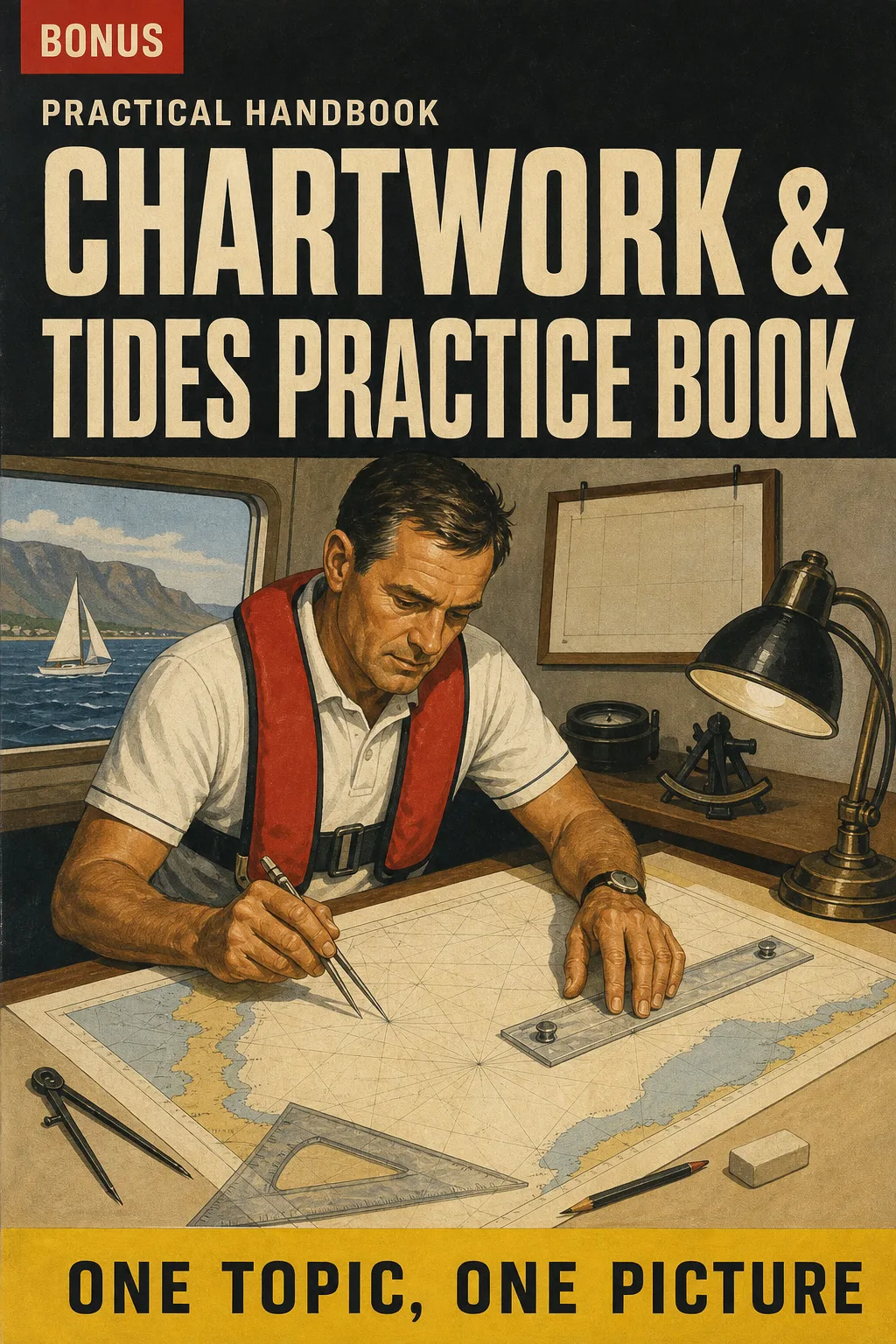
Chartwork & Tides Practice Book

BONUS 1: «Chartwork & Tides Practice Book»

Value on its own: US$ 17.90

Exam-style questions and chart exercises with fully worked answers, so you practise every calculation until the steps come out the same way every time.

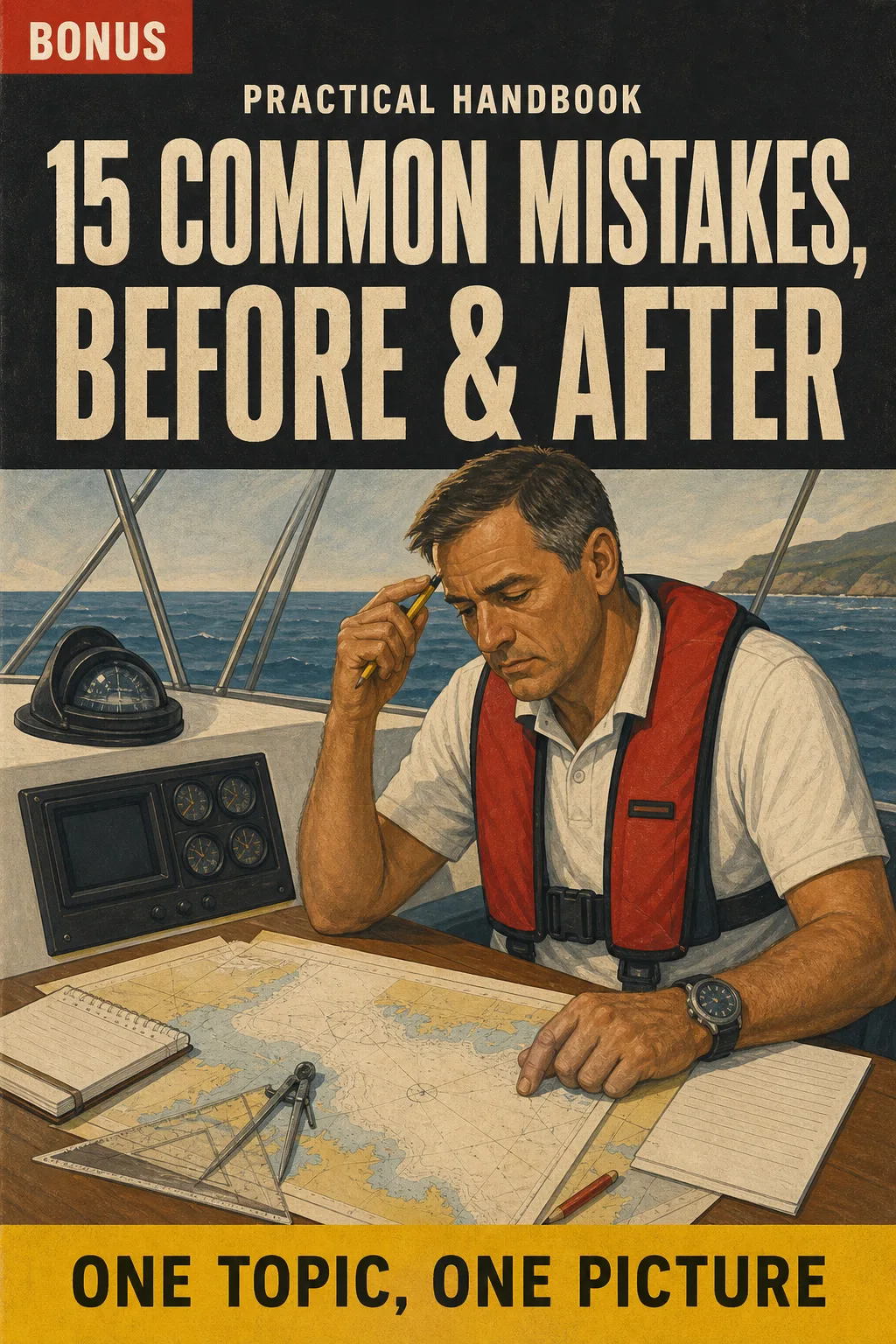
15 Common Mistakes, Before & After

BONUS 2: «15 Common Mistakes, Before & After»

Value on its own: US$ 14.90

The most common errors with variation, tides, buoyage and right of way, each drawn wrong and then right, for a quick review the night before the exam.

Day Skipper Theory Illustrated with 2 Free Books

  • Day Skipper Theory Illustrated: 75 illustrated pagesUS$ 63
  • BONUS 1: Chartwork & Tides Practice BookUS$ 17.90
  • BONUS 2: 15 Common Mistakes, Before & AfterUS$ 14.90
  • High-resolution PDF to printIncluded
Total value US$ 95.80
YOUR PRICE:
US$ 27
You save US$ 68.80
YES, I WANT DAY SKIPPER THEORY ILLUSTRATED FOR US$ 27

📄 This is a digital PDF book sent to your email: nothing is printed or shipped.

Secure purchaseEncrypted payment30-day guarantee

PDF by email: We email you Day Skipper Theory Illustrated as a PDF, together with the two free books. It's a single payment: no installments, no extra charges.

Who This Book Is For

You're doing the theory course

You're doing the theory course

Each evening's topic has its own page, so you go over chartwork and tides at home and arrive at the next session knowing the steps.

The theory paper is close

The theory paper is close

The exam review part puts the order for every calculation, the buoys and the vessel lights on four pages, ready for the last evenings before the paper.

You're already skippering

You're already skippering

Print the pages you need and keep them at the chart table: lights, cardinals and the Mayday call, at a glance.

Everything You Get Today

US$ 95.80US$ 27
YES, I WANT DAY SKIPPER THEORY ILLUSTRATED FOR US$ 27

📄 This is a digital PDF book sent to your email: nothing is printed or shipped.

30DAYS
GUARANTEE

30-Day Guarantee

Try Day Skipper Theory Illustrated for 30 days, bonus books included.

We refund everything if the file won't open, if the book isn't what you see here, if you were charged twice or if the email doesn't arrive. Just email us.

You pay once. No subscriptions.

Frequently Asked Questions

Is it for me if I've crewed for years but never studied the theory?

Yes. It starts with the words the instructor uses and builds up to the calculations, so it works whether chartwork is new to you or you've had years at sea and want the theory in order.

Is it for Day Skipper theory in South Africa?

Yes. It's written for Day Skipper theory in South African waters: IALA Region A buoyage, the COLREGs, the SAMSA small vessel categories, westerly variation in the worked examples, metres, knots and nautical miles, and the Agulhas Current. It's based on the COLREGs, the SAMSA regulations, South African Navy Hydrographic Office charts and tide tables, and South African Weather Service marine forecasts. The rules are paraphrased and drawn, never copied.

Is it official material?

No. It's an independent study book. It isn't issued, approved or endorsed by SA Sailing, SAMSA or any course provider.

Does it replace the course?

No. It's a companion for the theory course: where the course manual explains each topic in paragraphs, here each one is a page with a drawing and the steps in order. It doesn't replace the course, the practical exam or training on board, and it doesn't give you a certificate: the Day Skipper is still awarded through your course and exams.

Are the practice questions the ones in the exam?

No. The questions in the 'Chartwork & Tides Practice Book' are written for this book, in exam style and with worked answers. They aren't official exam questions.

When and how does it arrive?

The book and the 2 bonus books arrive as a PDF by email, to the address you enter at checkout.

Do I have to pay every month?

No. It's a one-off payment, with no subscription.

Can I have it on paper?

Yes. The PDF is ready to print at home or at a print shop. Print the whole book, or just the review pages for the chart table.

How does the refund work?

You have 30 days. We refund everything if the file won't open, if the book isn't what you see on this page, if you were charged twice or if the email doesn't arrive: just email us.

Before You Close This Page

No more rereading the manual with nothing sticking.

Course to steer, tides and cardinals: you see them drawn and that's it.

You reach the theory paper knowing where everything is.

Drawings make studying faster.

The book is right below.

One-time payment: US$ 27 · Guarantee: 30 days · PDF by email

YES, I WANT DAY SKIPPER THEORY ILLUSTRATED FOR US$ 27

📄 This is a digital PDF book sent to your email: nothing is printed or shipped.